
The French wheat harvest fell short of expectations.
Although it was expected to be an excellent crop, the 2021 wheat harvest has ultimately been disappointing. Read the analysis by Pierre SIMPHAL and Sébastien MAINARD of the Vivescia cooperative.
Initial positive forecasts:
In the fall, large areas of wheat were planted (5.05 million hectares, up 18% from last year and up 4% compared to the five-year average, according to Tallage Stratégie Grain) under favorable conditions, immediately pointing to a strong wheat harvest. Regular rainfall across much of France’s wheat-growing region through the spring confirmed these positive expectations. By late May, analysts were forecasting a soft wheat harvest of at least 38 million metric tons.
Heavy rainfall is a game-changer:
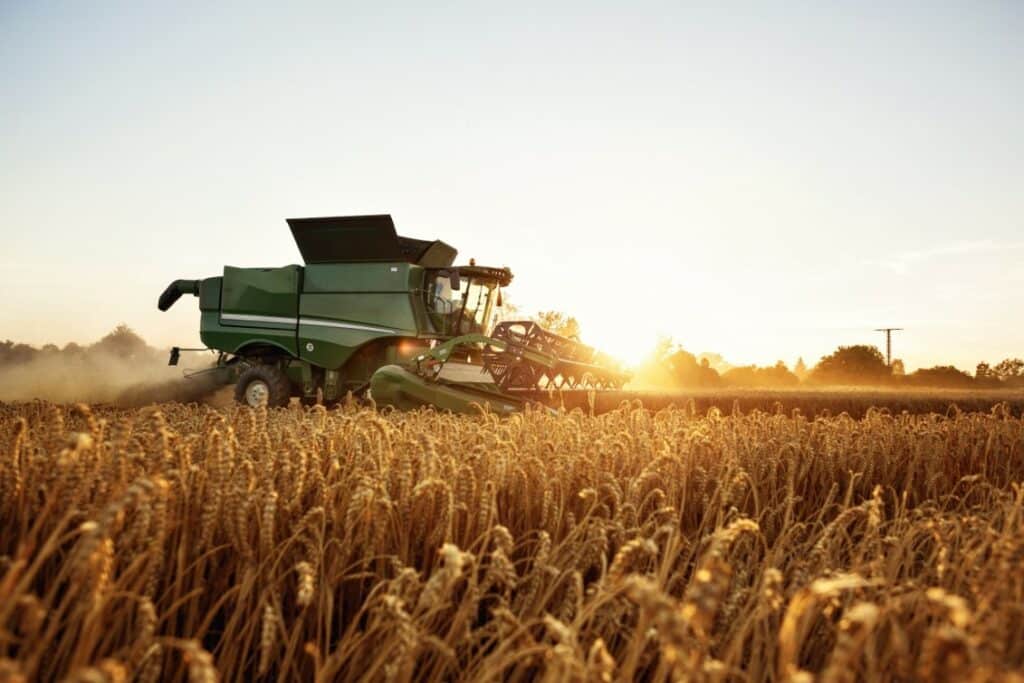
However, the arrival of heavy rains starting in mid-June changed the situation. These unusual rains were almost continuous until August 10, leaving farmers with few opportunities to harvest. For example, 175 mm of rain fell in the Marne region between June 15 and July 31, whereas in 2020, 25 mm fell during the same period and the 10-year average is 85 mm. Consequently, wheat quality and yield potentials were compromised. The lack of sunshine during the late growing season also impacted the TGW (Thousand-Kernel Weight), which was lower than expected. As of August 16, according to figures from France Agri Mer, 91% of the soft wheat harvest had been completed in France.
A mixed picture
Thanks to an increase in acreage, the 2021 wheat harvest is still expected to reach around 36.7 million metric tons, according to France Agri Mer, which is above the 10-year average (35.1 million metric tons). Quality is inconsistent and, in some cases, below expectations. Soil conditions, varieties, crop rotations, and harvest dates have had a significant impact on the quality of wheat harvested across the region. The protein content is satisfactory, at over 11%. Specific gravity and Hagberg falling number values are acceptable but are deteriorating as the harvest progresses.
Without waiting for the harvest to end, we can already say that the work done by storage facilities to select, sort, and clean the batches will be essential to ensuring a high-quality supply for millers throughout this harvest season.