
Climate and its impact on wheat
The area planted with soft wheat in France for the 2022 harvest (4.76 million hectares) has decreased (according to data from the Ministry of Agriculture and Food Sovereignty) by 5% compared to last year’s area and by 1.5% compared to the five-year average. This decline has been offset by an increase in acreage for oilseeds (rapeseed, sunflower) and sugar beets, in particular.
Despite this reduction in acreage, production prospects through the spring were very promising. From fall planting through the end of winter, everything looked promising thanks to fairly steady rainfall and a mild winter.
However, unlike last year, the spring drought and the heatwave since mid-June have reduced yield potential. For example, in the Grand Est region, rainfall over a three-month period (March 1–June 1) totaled 100 mm this year, compared with a 10-year average of 215 mm.
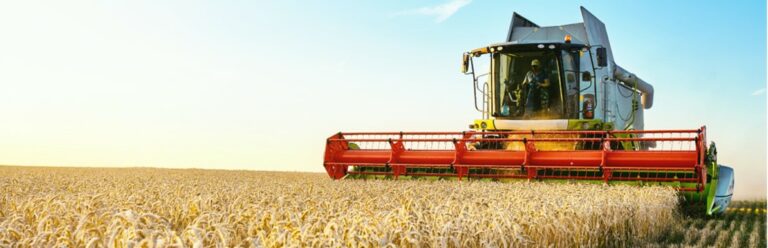
Given these end-of-season conditions, the soft wheat harvest was extremely early. The French wheat harvest ended in late July, whereas it usually lasts until mid- to late August.
Among the major wheat exporters (Russia, Canada, the U.S., Australia, etc.), production is expected to be decent, exceeding last year’s levels.
The French harvest, like that of the EU-27, is below the five-year average in terms of quantity. However, it is satisfactory in terms of quality. The ability of the soil to retain water and release it to the plants has been crucial. We therefore see significant variation in yields depending on the terroir, resulting in a wide range of protein levels (north of the Loire, yields are fair to good, leading to lower protein levels; conversely, south of the Loire, yields are disappointing but result in higher protein levels). Specific gravities, meanwhile, are satisfactory.
As we do every year, all our teams are hard at work in our mills, selecting and blending batches of wheat to create blends that guarantee consistency and uniformity.
Production and Yield Estimates (Soft Wheat)
• French production: 33–33.5 MT vs. 35.4 MT last year vs. 34.9 MT on average over 5 years.
• French yield: 6.95–7.0 T/ha vs. 7.15 T/ha last year vs. 7.2 T/ha on average over 5 years.
• EU-27 yield: +/-5.7 T/ha vs. 5.95 T/ha last year vs. 5.8 T/ha on average over 5 years.

• Protein content: average > 11%
• Specific gravity: > 78 kg/hl
• Hagberg index: well over 220 seconds

Kneading:
• ↑ Hydration: Hydration at the target level
• ↑ Smoothing: Significantly improved smoothing
Preparation:
• → Fermentation activity
• ↑ Oven stability
Processing:
• → Elasticity
• → Stretchability
• → Tights
Finished product:
• → Slightly low volume, beautiful finished products
• ↑ Coloration of the crust and crumb
Our tips:
Baguettes: Moisture content is on target. The dough has a different profile than last year: better smoothing.
The autolysis and extended kneading time recommended last year are no longer necessary this year. The finished products look great, with beautiful crumb colors and well-developed slashes.
Milling mixes: The formulas for our miller’s mixes are constantly adapted to harvest conditions to ensure consistent, high-quality results. No adjustments on your part are required.
Improver agents: SECUR’DETENTE yields better results this year, but both SECUR’DETENTE and SECUR’TOLERANCE can be used and will produce excellent products.
Kneading:
• ↓ Hydration: slight decrease
• ↑ Significantly improved smoothness
Preparation:
• → Fermentation activity
• → Oven performance: less tolerance for long preparation times
Fabric properties:
• → Elasticity
• ↑ Stretch
• → Tights
Finished product:
• ↑ Beautiful finished products, very good volume
• → Nice creamy crumb color
Our tips:
Baguettes: Our millers refine our wheat blends every year to ensure optimal and consistent quality. The moisture content is slightly lower than in the previous harvest. The dough has a different texture than last year: it glides more smoothly and has greater elasticity. The autolysis and increased kneading time recommended last year are no longer necessary this year. The finished products are attractive, with beautiful crumb colors and well-developed scoring.
Milling blends: The formulations of our milling blends are constantly adapted to harvest conditions to ensure consistent, high-quality results. No adjustments on your part are required.
Improver blends: SECUR’DETENTE yields better results this year, but both improver blends—SECUR’DETENTE and SECUR’TOLERANCE—can be used and will produce excellent products.
Kneading:
• ↑ Hydration: return to normal hydration
• ↑ Significantly improved smoothing
Preparation:
• → Fermentation activity
• → Oven performance: less tolerance for long preparation times
Fabric properties:
• → Elasticity
• ↑ Stretch
• → Tights
Finished product:
• → Beautiful finished products, very good volume
• ↑ Beautiful creamy crumb color
Our tips:
Baguettes: Every year, our millers refine our wheat blends to offer you consistent, top-quality bread. The doughs have improved compared to last year: we’ve returned to normal hydration levels, achieved smoother texture, and increased elasticity. The autolysis and increased kneading time recommended last year are no longer necessary this year. The finished products are beautiful, with attractive crumb colors and well-developed scoring.
Milling blends:The formulas for our milling blends are constantly adapted to harvest conditions to ensure consistent, high-quality results. No adjustments on your part are required.
Improver blends: SECUR’DETENTE yields better results this year, but both improver blends—SECUR’DETENTE and SECUR’TOLERANCE—can be used and will produce excellent products.
Kneading:
• ↑ Hydration
• → Smoothing
Preparation:
• → Fermentation activity
• → Oven performance
Handling:
• → Elasticity
• ↓ Stretchability
• → Clinginess
Finished product:
• ↑ Beautiful finished products, nice crust lines, and very good volume
• ↑ Beautiful creamy crumb color
Our tips:
Baguettes: Every year, our millers refine our wheat blends to offer you consistent, top-quality results. We’ve returned to normal hydration levels. The finished products are beautiful, with attractive crumb colors and well-defined crests.
Miller’s blends: The formulations of our miller’s blends are constantly adapted to harvest conditions to ensure consistent, high-quality results. No adjustments on your part are necessary.
Improver blends:SECUR’TOLERANCE yields better results this year, but both improver blends—SECUR’DETENTE and SECUR’TOLERANCE—can be used and will produce excellent products.
Kneading:
• → Hydration
• ↑ Significantly improved smoothness
Preparation:
• → Fermentation activity
• → Oven performance
Textile properties:
• ↑ Elasticity
• → Stretch
• → Firmness
• → Cling
Final product:
• → Good volume, attractive final products
• ↑ Beautiful creamy crumb color
Our tips:
Baguettes:The dough has a different profile than last year: it’s smoother and slightly more elastic. The autolysis and extended kneading time recommended last year are no longer necessary this year. The finished products look great, with beautiful crumb colors and well-developed slashes.
Milling blends: The formulas for our miller’s blends are constantly adapted to harvest conditions to ensure consistent, high-quality results. No adjustments on your part are required.
Improver agents: SECUR’DETENTEyields better results this year, but both improver agents—SECUR’DETENTE and SECUR’TOLERANCE—can be used and will produce excellent products.