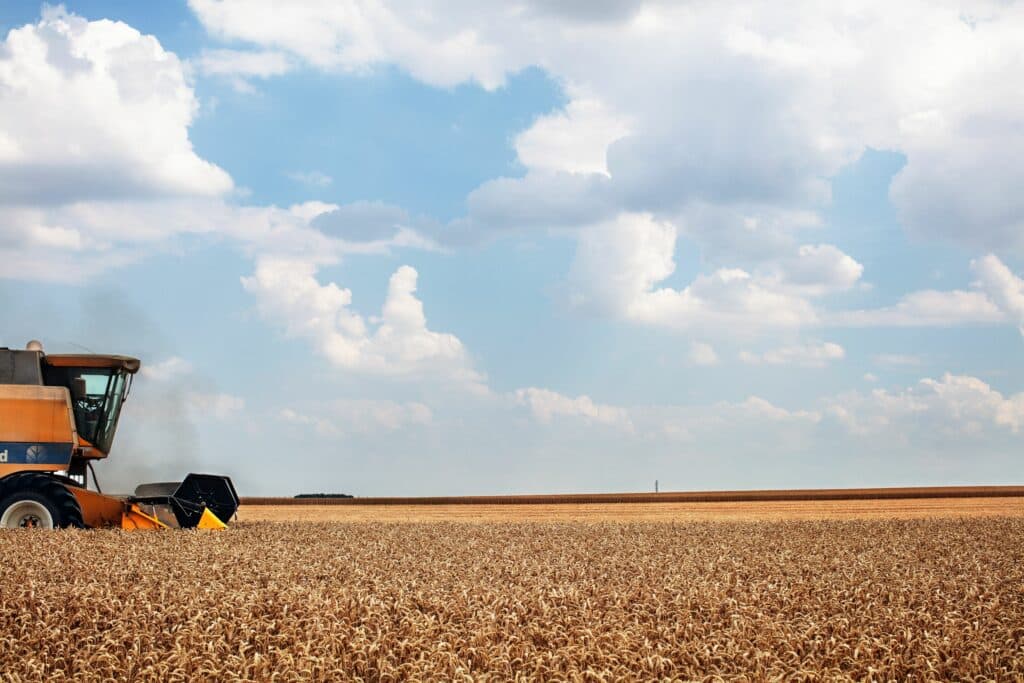
After a difficult year and months of rain, thethis this year's harvest is marked by significant variation and disappointing yields.
©Guillaume Czerw
An Unusual Harvest: General Information
From planting to harvest, winter crops have been affected/hampered by frequent rainfall across most of France.
Many wheat fields could not be planted in the fall due to excess water, mainly along the Atlantic coast. As a result, the French wheat acreage for the 2024 harvest stands at 4.2 million hectares, according to market consensus (representing an 11% decrease in acreage compared to last year). Nearly continuous rainfall throughout the growing season led to significant disease and weed pressure, which weighed on yields. During the grain-filling phase in June, a lack of sunshine and low temperatures also contributed to lower yields. Finally, the rains persisted during the harvest period, affecting both the yield and the quality of the wheat.
Across France’s various growing regions, we can expect an overall decline in yields of 10 to 30 percent. In terms of both yield and quality, this harvest is therefore inconsistent, varying depending on harvest dates, soil types, and terroirs.
In Europe, the harvest is below average, mainly due to a decline in production in France and Germany.
Globally, wheat production is generally good. We can note a very satisfactory harvest in the United States (54 million metric tons, up 4 million metric tons from last year) and a harvest that turned out to be decent in Russia (around 85 million metric tons) after concerns in the spring due to late frosts.
EProduction and yield estimates:
• French production: 25.5 MT vs. 35.1 MT last year vs. a 5-year average of 34.5 MT.
• French yield: 6.1 tons per hectare vs. 7.35 tons per hectare last year vs. a 5-year average of 7.28 tons per hectare.
• EU-27 yield: ±5.6 t/ha vs. 5.85 t/ha last year vs. a 5-year average of 5.9 t/ha.
CCharacteristics of wheat in the VIVESCIA harvest area:
• Protein content: average >11%
• Hagberg falling number: >220 seconds.
Since farmers are the best people to talk about it, read the story of Alexandre, a VIVESCIA cooperative farmer in the Aube region, who shares his experience with us:
The 2024 Regional Harvest Reports: Keeping Our Customers Informed in a Timely Manner
Every year, Grands Moulins de Paris publishes regional harvest reports that take into account the specific characteristics of the wheat that will be supplied to each of our mills.
These letters contain advice from our specialists for all our artisan bakers, to help them adapt to these specific conditions. This information is backed up by local details, which are all the more necessary given the variability of this year’s harvest. To provide verified and synthesized information regarding the variability of the harvests, we take the time at each of our mills to conduct all necessary tests.
Once the wheat is in our mills, what happens next?
While we look forward to sharing these regional harvest reports with you soon, we invite you to get a behind-the-scenes look at the process through the stories of the team members working on the new harvest.
Meetings with:
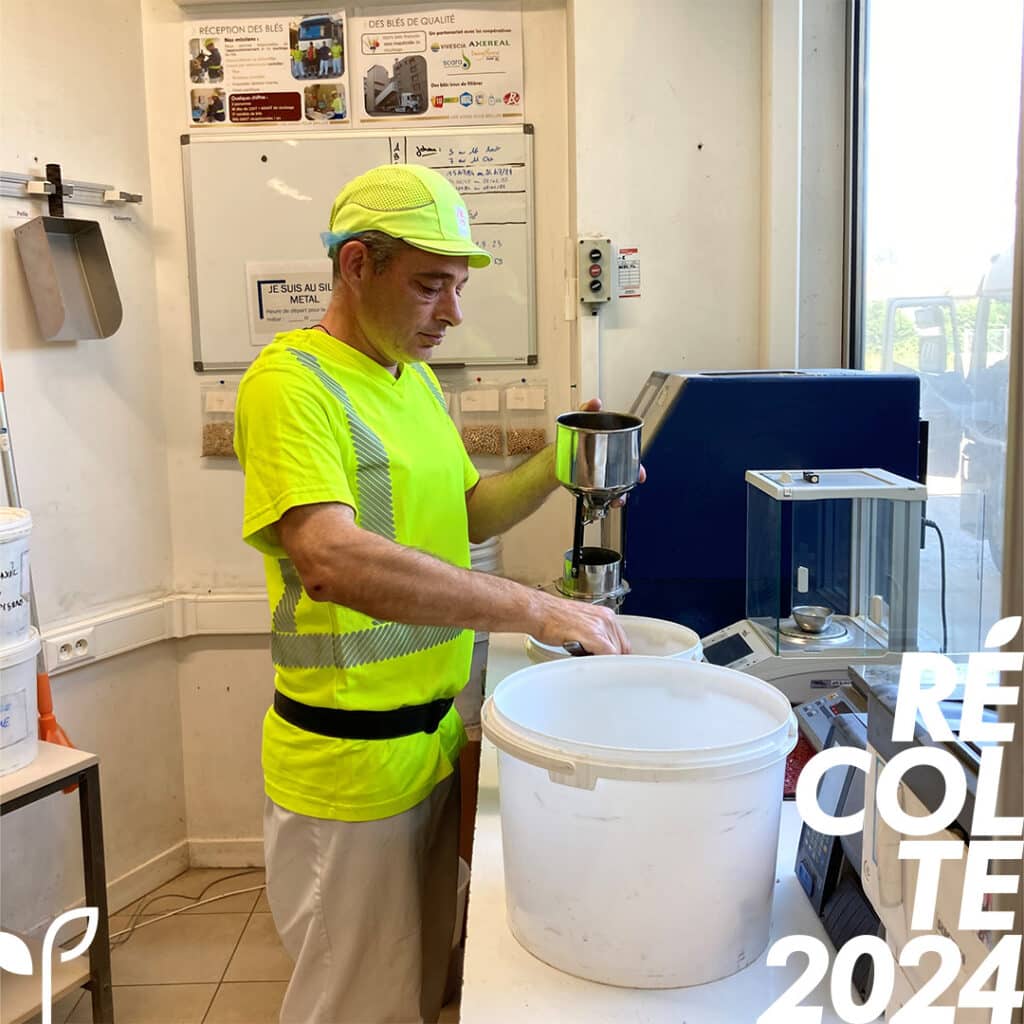
Christophe Ridel, wheat receiver at the Brienne mill
“My job is to receive the wheat that will be used at the mill. A sample is taken from each truck that arrives on site. I check the quality of the sampled wheat to verify its compliance through various tests: moisture content, protein content, specific gravity, impurities, and so on. In high-risk years, I may also analyze the Hagber falling numberg to verify the germination rate of the wheat grains. If all my analyses are in compliance, I authorize the driver to unload his wheat into the pit.”
“The harvest and the arrival of the new wheat crops are a highlight for us at the mill. The quality of the wheat varies from year to year. It’s essential that I remain vigilant so I can alert the quality control and production departments if any unusual results come up.”
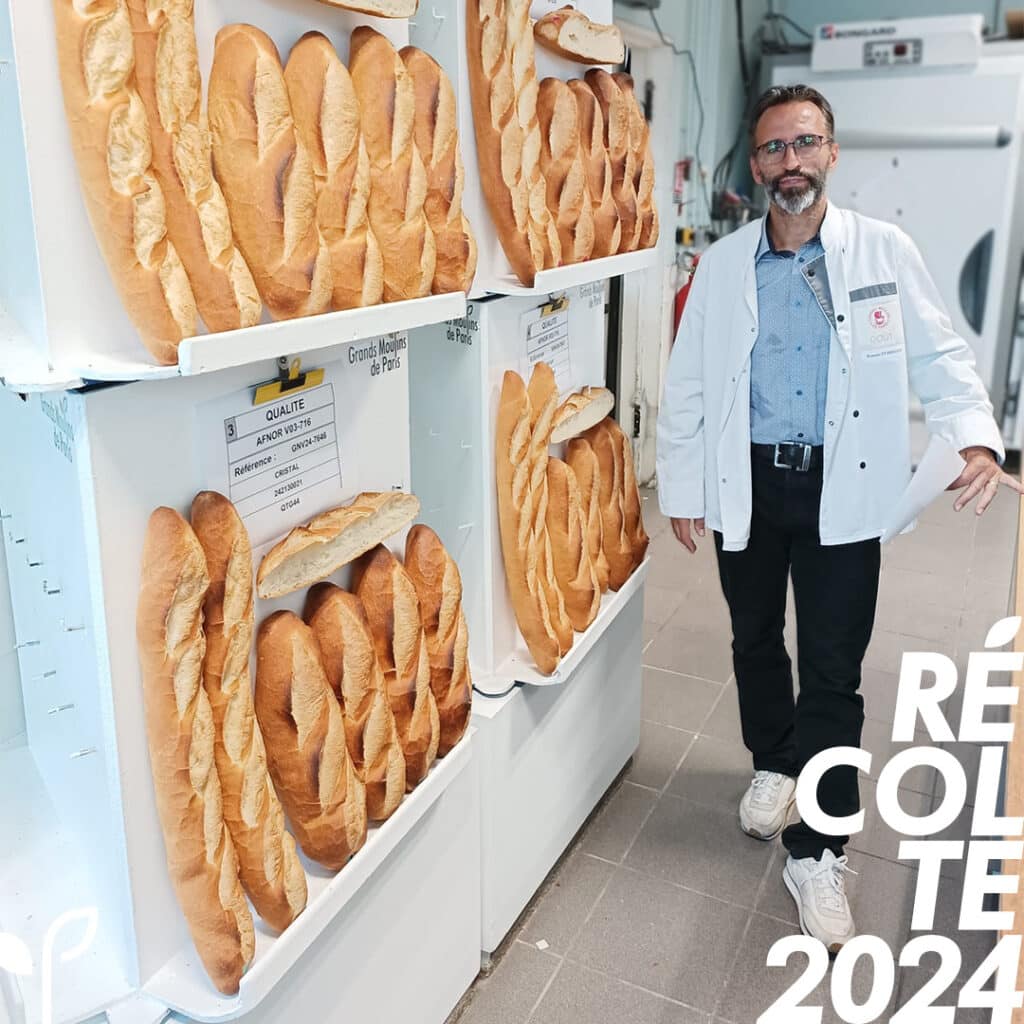
Frédéric Pirès, Quality Coordinator at the Paris-Gennevilliers mill
“My role during the harvest, with the help of the laboratory and the test bakers, is to select the best batches of wheat offered by the cooperatives and to determine a balanced blend so that the mill can produce a consistent, high-quality flour.”
During this period, another equally important task is to review all the formulations of the flours we offer our customers in order to maintain consistent quality despite the change in crop and the difference in quality between the two harvests.
"Wheat is a living raw material, and every year we have to reevaluate it. It’s both exciting and rewarding!"

Jean-Michel Enea — technician in the product quality laboratory at the Bordeaux mill
“My role during harvest is to analyze the freshly harvested wheat to determine its physical and chemical properties.”
I process the wheat received from the cooperatives into flour using a laboratory mill, and then I perform tests, such as the Chopin alveograph.
Characterizing wheat varieties allows us to select the ones best suited to our customers' needs.
“It also allows us to determine the flour blends we will use during the harvest transition and throughout the year, ensuring that the flours are always perfectly balanced for our customers’ intended uses.”
Specific gravity, protein content, Hagberg falling number... Are you familiar with these key criteria in the milling industry?
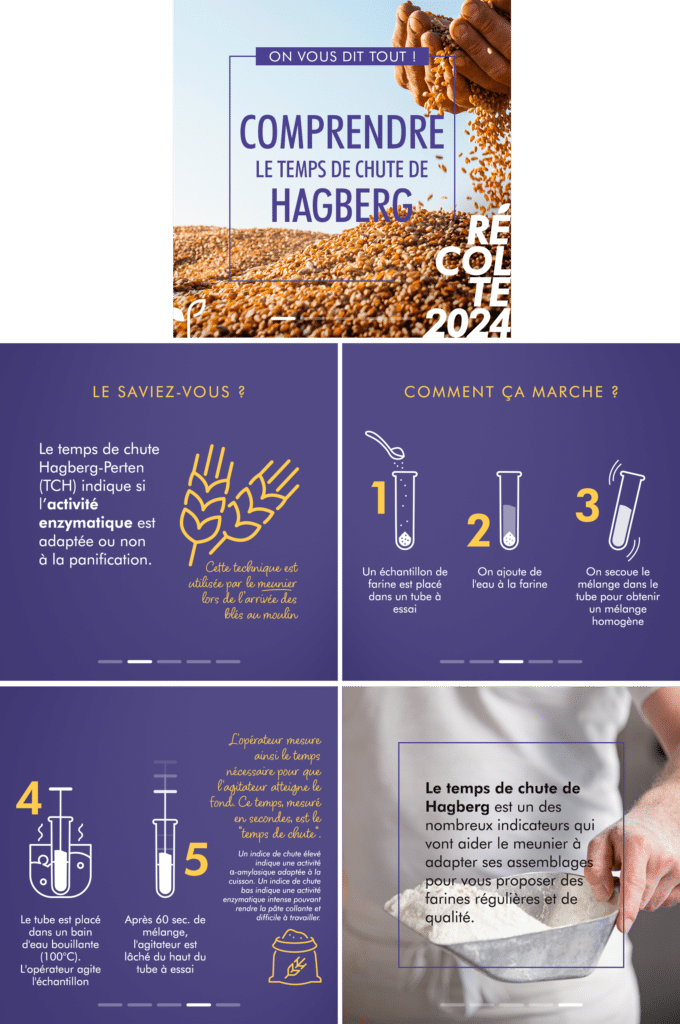
Hagberg falling time
Whose falling time? If you think you could use a quick refresher, we’ll explain what the Hagberg falling time is in a helpful infographic:
The protein content of wheat
As millers, we conduct numerous analyses to determine the protein quality of the French wheat varieties we use. The goal is to create the best blend of wheat to produce flours that meet our specifications.
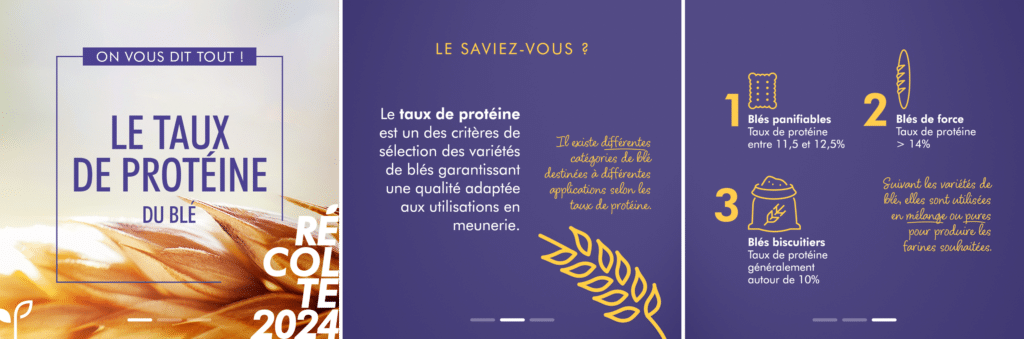
💡 Did you know?
There are two main categories of wheat:
• BPMF (Wheat for French Milling) ensures a quality suitable for milling when used in blends.
• VRMs = Varieties Recommended by the Flour Milling Industry, which are a limited selection of varieties that can be used alone or in blends.
Within these two categories, we distinguish between:
• Bread wheat with a protein content between 11.5% and 12.5%
• High-protein wheat with a protein content of more than 14%
• Bread wheat varieties, which generally have a protein content of around 10%
The Specific Gravity (SG) of wheat
Expressed in kg/hl, it represents the density of a pile of grains.
In the past, grain was traded by volume (barrels, bushels, etc.). Today, even with the use of truck scales, this criterion remains crucial, with a contractual minimum of 76 kg per hectoliter.
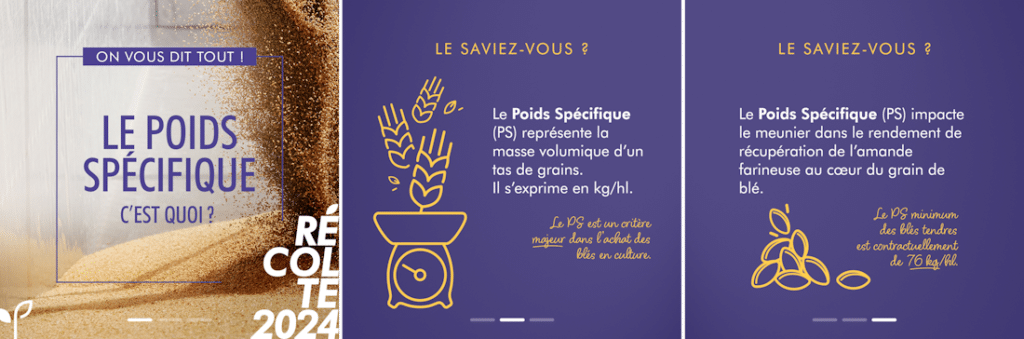
💡 Did you know?
Wheat grown in France generally has a specific gravity (SG) ranging from 77 to 82. Specific gravity is a key factor in purchasing wheat from the field.
This trait is always sought after in variety selection. Growing conditions and climate, particularly during the grain-filling and ripening stages, have a significant impact. Grain weight can be reduced by drought or heavy rains, resulting in smaller, misshapen, or less dense grains.
These variations in specific gravity affect flour yield in mills. When grains are too small, underdeveloped, or less dense and hard, the process of separating the kernel (the floury endosperm) from the husk (the bran) becomes more complex.
Mill equipment is designed to process grains weighing at least 76 kg/hl. Specific gravity is also an indicator used to organize the transport and storage of wheat.