Our milling business involves turning wheat grains into flour. During this process, only part of the grain is used to make flour; the other parts, which are just as valuable, are put to various uses. Let us explain it all to you!
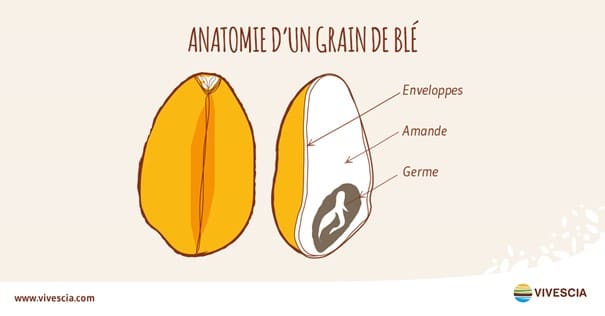
A wheat kernel consists of three main parts:
• The endosperm, the central part rich in starch.
• The germ, the small inner part rich in nutrients.
• The husks, located on the outside of the kernel, which become bran during the flour-making process.
In the manufacturing process, the kernel is primarily used to produce flour. For whole-grain flours, the bran (which is processed from the husks) and the germ—that is, all parts of the grain—are also added to provide more fiber and nutrients.
Other byproducts, such as excess bran, unused germ, or certain products removed from the production line, can be repurposed in various ways, provided they are properly sorted.
Sorting at the source to reduce waste
To ensure these materials are directed to the appropriate recycling streams, effective sorting as soon as they arrive is essential. This allows for the selection of the most environmentally sound solutions and prevents products that can still be recycled from being unnecessarily destroyed.
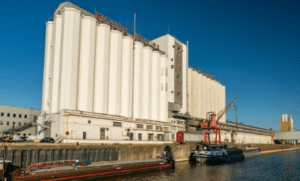
It is with this in mind that a specific process has been implemented at the Moulin de Paris-Gennevilliers. Before the sorting process was organized, non-compliant products were systematically sent to anaerobic digestion, regardless of their actual quality.
Since 2024, a Link operator has been hired to improve the sorting of organic waste:
• As a result, certain products that are safe for human consumption but have defects (incorrect labeling, wrong product code, non-compliant packaging, etc.) are now recycled: they are emptied, repackaged, and then reintroduced into the production cycle.
In 2024, this improvement in sorting reduced the amount of materials sent to the animal feed and anaerobic digestion sectors by 55% compared to 2023.
• Other products, unfit for human consumption but suitable for animal feed, are redirected to this sector.
This more detailed sorting process helps maximize the value of the materials and reduces the need for anaerobic digestion, which is now reserved for non-recyclable materials.
Making the Most of Bran and Germ: Byproducts for Food Use
The bran and part of the germ resulting from grain processing are used as animal feed, particularly for cattle, pigs, and poultry. Rich in fiber, protein, and minerals, these byproducts are a valuable resource for the livestock industry.
In addition, another fraction of the germ, of superior quality, is intended for human consumption, particularly for the production of vegetable oils or nutritional ingredients.
This dual-purpose use helps reduce waste while meeting specific nutritional needs. Whenever quality permits, materials from the sorting process are directed toward these channels, which remain a priority in our approach to sustainable resource utilization.
The rest: anaerobic digestion, a method of energy recovery
When products cannot be reused or used as animal feed, they are sent for anaerobic digestion.
Anaerobic digestion is a biological process that converts organic matter into energy. Waste (grain residues, unused bran, germ, etc.) is placed in a digester, a closed environment where microorganisms break down the material in the absence of oxygen. This process produces biogas, composed mainly of methane.
This biogas is then used to produce:
• electricity,
• heat,
• or biofuel.
Anaerobic digestion also produces a byproduct called digestate, which can be used as a natural fertilizer, thereby completing a virtuous cycle.
This sector remains a useful solution for non-recyclable products. For example, at the Moulin de Marseille, 434 tons of cereal byproducts were converted into energy through anaerobic digestion in 2024, producing approximately 100,000 nm³ of methane (CH₄). This represents 1,000,000 kWh of energy, equivalent to the annual consumption of 400 French households.